The clearest signs a tree is dying are peeling or cracked bark, fungal growth at the base, deadwood in the canopy, sudden leaning, sparse or off-season leaf loss, root or soil damage, and vertical trunk cracks. Any one of these on its own is worth investigating; two or more together usually means it's time for a professional assessment.
The 7 Warning Signs
- Bark loss, cracking, or peeling — healthy bark is intact and firmly attached. Large patches of missing or loose bark expose the tree to pests, disease, and moisture damage.
- Fungal growth at the base or trunk — bracket fungi or mushrooms growing from the trunk or root zone are one of the most reliable signs of internal decay.
- Deadwood scattered through the canopy — a few dead twigs are normal, but significant dead branching throughout the crown signals the tree is struggling.
- A sudden or increasing lean — especially after wet weather, a new lean can mean root failure or soil instability, and is often an urgent hazard.
- Sparse canopy or off-season leaf loss — leaves dropping outside autumn, or a noticeably thin canopy compared to previous years, points to root or vascular stress.
- Root damage or heaving soil — cracked pavement, lifted soil, or exposed, damaged roots around the base weaken the tree's structural anchor.
- Vertical cracks or splits in the trunk — these indicate internal structural failure and often mean a branch or the whole tree could fail without warning.
Seeing two or more of these seven signs together is the general threshold arborists use to recommend an on-site risk assessment rather than a wait-and-see approach. General arboricultural risk-assessment practice (AS 4373)
The Scratch Test
A quick, low-risk way to check a branch or small trunk: scratch a small patch of outer bark with a fingernail or pocketknife. Green, moist tissue underneath means that section is alive. Brown, dry tissue means it's dead. Check several spots — a tree can have dead sections while the rest of it survives, which is exactly why deadwood pruning exists as a service.
"A dying tree rarely fails without warning — it almost always shows one of these seven signs first. The risk isn't the tree; it's ignoring what it's already telling you."
Can a Dying Tree Be Saved?
Sometimes. If the underlying cause is treatable — compacted soil, a fixable pest issue, or damage from over-pruning — an arborist may recommend targeted treatment, deep-root watering, or corrective pruning instead of removal. If decay is advanced, or root damage has compromised stability, removal is usually the safer and more cost-effective path. See our tree removal cost guide for what that typically involves.
How Urgent Is It?
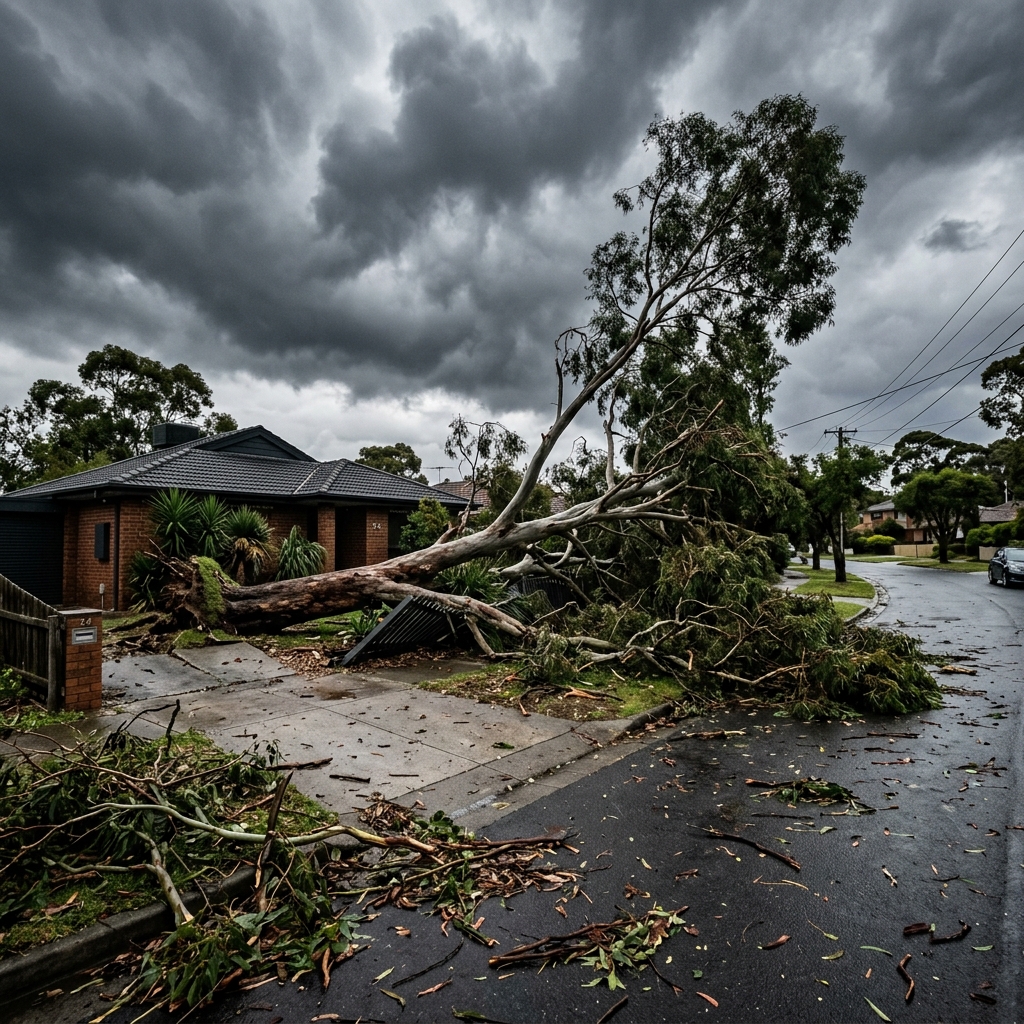
Location changes the urgency more than the diagnosis does. A dying tree in the middle of a large backyard can often wait for a scheduled assessment. The same tree overhanging a house, fence, driveway, or footpath should be treated as urgent — dead branches and trunks can fail without warning, especially in wind or storms. If your tree has already dropped branches or shows storm damage, check our storm damage checklist next.
Worried About a Tree on Your Property?
Our ISA-qualified arborists can assess it and give you an honest recommendation — treatment, monitoring, or removal.
Request a Free Assessment →Common Questions About Dying Trees
How can I tell if my tree is dead or just dormant?
Scratch a small patch of bark on a twig — green, moist tissue underneath means it's alive; brown and dry means that section is dead. Check several branches.
Is fungus at the base of my tree a bad sign?
Yes — bracket fungi or mushrooms growing from the trunk or root zone usually indicate internal decay, which can seriously weaken structural integrity.
Can a dying tree be saved?
Sometimes — if the cause is treatable, an arborist may recommend treatment. If decay or root damage is advanced, removal is usually safer and more cost-effective.
Do I need council permission to remove a dead tree?
Many Melbourne councils still require a permit even for dead trees under a Significant Landscape Overlay — see our council permits guide.
How urgently should I deal with a dying tree?
If the tree overhangs a house, fence, driveway, or footpath, treat it as urgent — dead branches and trunks can fail without warning, especially in wind or storms.